Menu

Digital identity for real products

Origin matters.Evidence connects.

Traceability technology connecting products, industry and institutions.

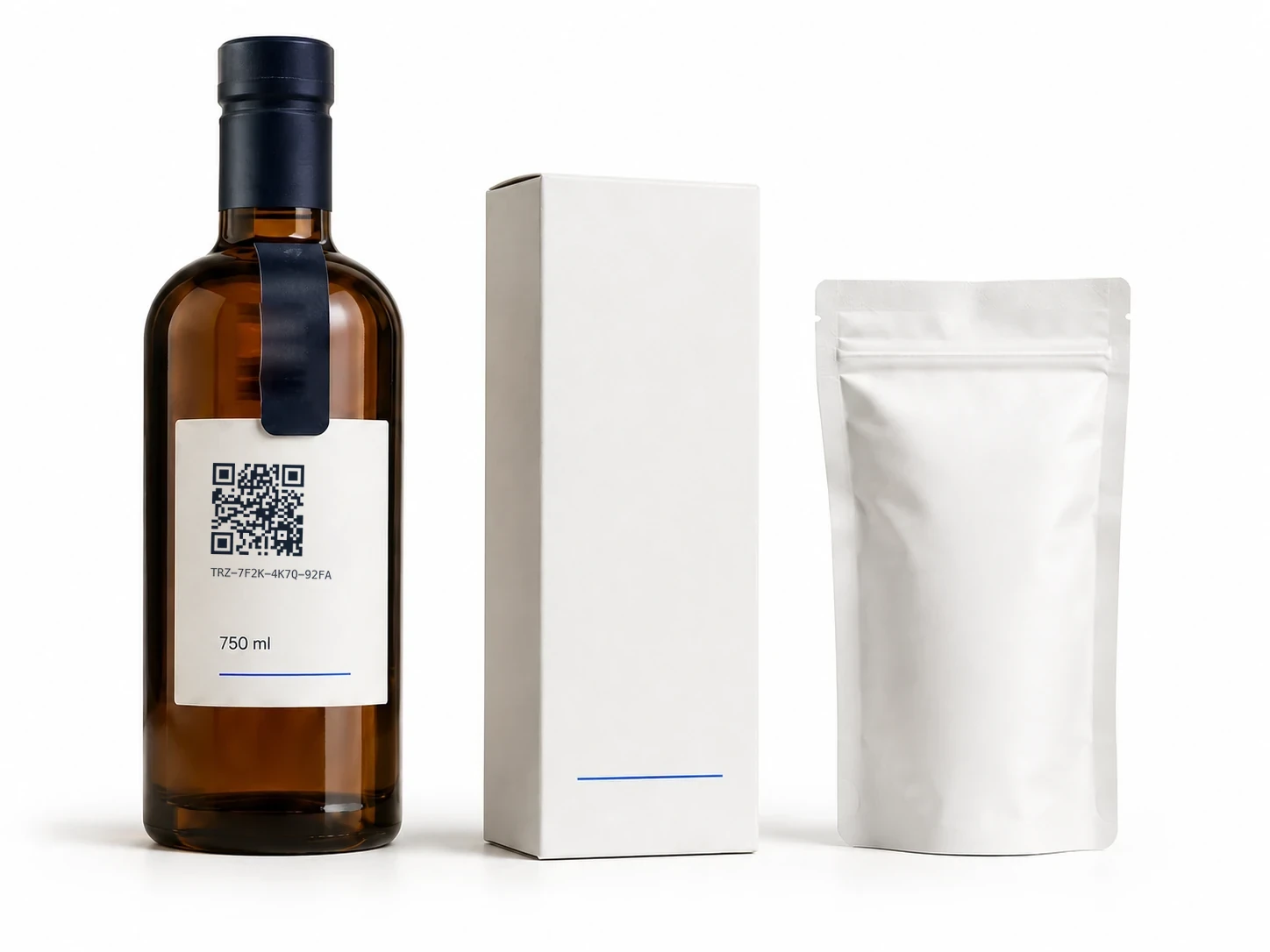
An amber bottle whose label carries a QR code and the identifier TRZ-7F2K-4K7Q-92FA, next to a carton and an unbranded pouch.
The bottle represents a unit linked to its record. This data relationship does not certify the physical object or apply to the other packages.

Every product has a story.

Render of an amber bottle with a blue band on the neck.

Explore how a unit is connected to its record.

You set the pace

Illustration · proposal

01 / 10

One unit. Its own history.

Illustrated relationship between the product and this step’s data. This is not a scan or a physical check.

The whole journey follows the same product and its record.

Who contributes or decides
Programme participant
What changes
The unit to be identified is defined.

Illustration. It does not depict a real Traza installation or product.

02 / 10

Before the code, an accountable party.

Illustrated relationship between the product and this step’s data. This is not a scan or a physical check.

The participant joins and describes the product.

Participant
Defined responsibilities and permissions.
Product
Description and declared data.
Who contributes or decides
Participant and programme owner
What changes
An accountable party, the description and the identification rules are linked.

Registering information does not by itself prove that the object matches it.

03 / 10

The identity is issued.

Illustrated relationship between the product and this step’s data. This is not a scan or a physical check.

The identifier is linked to the unit record.

Identity
Issued · not yet applied.
Who contributes or decides
Issuer authorised by the programme
What changes
Narrative state: issued. This does not yet imply application or activation.

The signature attests issuer and data integrity. It does not prevent physical copies.

04 / 10

Applied does not mean active.

Illustrated relationship between the product and this step’s data. This is not a scan or a physical check.

The mark is applied to the object; activation is still pending.

Application
Mark applied to the object.
Activation
Pending · not yet active.
Who contributes or decides
Person responsible for application on the line
What changes
Application is recorded separately from authorisation to activate.

These states are a narrative proposal; they do not extend the verification engine.

05 / 10

Activation has a condition.

Illustrated relationship between the product and this step’s data. This is not a scan or a physical check.

The programme defines who activates and what must be checked first.

Narrative state
Active · change documented.
Who contributes or decides
Authorised role under the programme rules
What changes
The state changes from pending to active and the change is documented.

Illustrated transition. No activation date or real authorisation is invented.

06 / 10

Linked, not given the same identity.

Illustrated relationship between the product and this step’s data. This is not a scan or a physical check.

Units, cases and pallets keep their own identifiers.

Pallet
Own identity; linked to the case.
Case
Own identity; linked to the unit.
Unit
Its identifier does not change when grouped.
Who contributes or decides
Participant grouping the units
What changes
Parent-child relationships are created between levels.

Querying the group does not prove that each unit is physically inside.

07 / 10

Separating also leaves a record.

Illustrated relationship between the product and this step’s data. This is not a scan or a physical check.

When items are ungrouped, the relevant relationships are closed.

Case-unit relationship
Closed in the story.
Unit identity
Preserved.
Who contributes or decides
Participant receiving or ungrouping items
What changes
The relationship is no longer active; its previous history remains.

A historical relationship does not prove where the product is today.

08 / 10

A gap needs context.

Illustrated relationship between the product and this step’s data. This is not a scan or a physical check.

The record is incomplete. Let us review the reason and the expected coverage.

State
Event not received.
Review
Pending synchronisation, a documented exception or another reason to establish.
Who contributes or decides
Participants providing events and the review team
What changes
Received events are compared with what was expected to be recorded.

An event not received is a state, not a cause. A gap does not prove fraud.

09 / 10

Four readings. Different limits.

Illustrated relationship between the product and this step’s data. This is not a scan or a physical check.

The lookup separates the evidence; it does not give an authenticity score.

Signature
Issuer and integrity of the signed data. It does not prevent physical copies.
Registry
Identifier found and declared status. Does not demonstrate location.
Data
Information to compare. The person checks whether it matches the product.
Signals
Patterns in the available records. No alerts does not mean no risks.
Who contributes or decides
Person looking up and comparing the product
What changes
Available information is shown without conflating the checks.

The lookup does not certify physical authenticity.

10 / 10

The same unit, with more history.

Illustrated relationship between the product and this step’s data. This is not a scan or a physical check.

A signal helps prioritise review. It does not make an accusation by itself.

Signal
An observation that merits review.
Outcome
Documented human decision; not an automatic verdict.
Who contributes or decides
Review or inspection role, according to the programme
What changes
The review and its documented outcome are added to the record.

Example: the outcome may confirm or correct the state. It does not modify the record.

Read the complete journey

Illustration · proposal

Related record: TRZ-7F2K-4K7Q-92FA. The story does not modify this record.

  1. One unit. Its own history.

    The whole journey follows the same product and its record.

    Who contributes or decides: Programme participant.

    What changes: The unit to be identified is defined.

    Illustration. It does not depict a real Traza installation or product.

  2. Before the code, an accountable party.

    The participant joins and describes the product.

    Who contributes or decides: Participant and programme owner.

    What changes: An accountable party, the description and the identification rules are linked.

    Participant: Defined responsibilities and permissions.

    Product: Description and declared data.

    Registering information does not by itself prove that the object matches it.

  3. The identity is issued.

    The identifier is linked to the unit record.

    Who contributes or decides: Issuer authorised by the programme.

    What changes: Narrative state: issued. This does not yet imply application or activation.

    Identity: Issued · not yet applied.

    The signature attests issuer and data integrity. It does not prevent physical copies.

  4. Applied does not mean active.

    The mark is applied to the object; activation is still pending.

    Who contributes or decides: Person responsible for application on the line.

    What changes: Application is recorded separately from authorisation to activate.

    Application: Mark applied to the object.

    Activation: Pending · not yet active.

    These states are a narrative proposal; they do not extend the verification engine.

  5. Activation has a condition.

    The programme defines who activates and what must be checked first.

    Who contributes or decides: Authorised role under the programme rules.

    What changes: The state changes from pending to active and the change is documented.

    Narrative state: Active · change documented.

    Illustrated transition. No activation date or real authorisation is invented.

  6. Linked, not given the same identity.

    Units, cases and pallets keep their own identifiers.

    Who contributes or decides: Participant grouping the units.

    What changes: Parent-child relationships are created between levels.

    Pallet: Own identity; linked to the case.

    Case: Own identity; linked to the unit.

    Unit: Its identifier does not change when grouped.

    Querying the group does not prove that each unit is physically inside.

    A container may be another level with its own identity. A lookup returns the associations in the record, not a physically verified inventory.

  7. Separating also leaves a record.

    When items are ungrouped, the relevant relationships are closed.

    Who contributes or decides: Participant receiving or ungrouping items.

    What changes: The relationship is no longer active; its previous history remains.

    Case-unit relationship: Closed in the story.

    Unit identity: Preserved.

    A historical relationship does not prove where the product is today.

  8. A gap needs context.

    The record is incomplete. Let us review the reason and the expected coverage.

    Who contributes or decides: Participants providing events and the review team.

    What changes: Received events are compared with what was expected to be recorded.

    State: Event not received.

    Review: Pending synchronisation, a documented exception or another reason to establish.

    An event not received is a state, not a cause. A gap does not prove fraud.

    Events include the contributing role, place and declared time. Without knowing expected events and coverage, an unrecorded movement cannot be inferred.

  9. Four readings. Different limits.

    The lookup separates the evidence; it does not give an authenticity score.

    Who contributes or decides: Person looking up and comparing the product.

    What changes: Available information is shown without conflating the checks.

    Signature: Issuer and integrity of the signed data. It does not prevent physical copies.

    Registry: Identifier found and declared status. Does not demonstrate location.

    Data: Information to compare. The person checks whether it matches the product.

    Signals: Patterns in the available records. No alerts does not mean no risks.

    The lookup does not certify physical authenticity.

  10. The same unit, with more history.

    A signal helps prioritise review. It does not make an accusation by itself.

    Who contributes or decides: Review or inspection role, according to the programme.

    What changes: The review and its documented outcome are added to the record.

    Signal: An observation that merits review.

    Outcome: Documented human decision; not an automatic verdict.

    Example: the outcome may confirm or correct the state. It does not modify the record.
From the need to the pilot, evaluation and continuity.

You set the pace

Proposed route · subject to the applicable regime

01 / 08

First, define the need.

Existing controls and visibility gaps are reviewed.

Industry route
Voluntary agreement between the parties.
Public programme
Authority and procurement decisions under its jurisdiction.
Who contributes or decides
Buyer and programme participants
What changes
Scope, use cases and what to measure are agreed.

Proposed route, not a universal legal formula or a deployment commitment.

02 / 08

Rules come before technology.

What gets identified, who records, what is public and what is protected.

Data and access
Ownership, custody and permissions defined per programme.
Operations
Equipment, consumables, integration and support: responsibilities to agree.
Who contributes or decides
Programme owners and participants
What changes
Data, permissions, responsibilities and costs to agree are documented.

Ownership is not automatically assigned to the state or to Traza.

03 / 08

Listening is documented too.

Consult, document and respond to the comments received.

Who contributes or decides
Industry, operators and programme owner
What changes
Comments receive a response and remain traceable.

Consultation may adjust or confirm decisions; it does not require changing everything.

04 / 08

Authorise. Measure. Then intervene.

The pilot requires prior authorisation or contracting.

Prerequisite
Pilot authorisation or contracting.
Baseline
Prior measurement with an agreed method and comparison.
Who contributes or decides
Buyer, pilot owners and evaluation team
What changes
The method is agreed and the starting position is measured before the pilot.

The public route depends on the applicable regime; a private agreement does not replace that authority.

05 / 08

Test with the people who will operate it.

The pilot tests application, reading, capture and integration.

Who contributes or decides
Pilot participants and proposed technical supplier
What changes
Measure again and compare with the baseline.

Attributing an improvement is difficult. Comparison alone does not establish causality.

06 / 08

Evaluate independently.

The supplier does not write the independent audit findings.

Possible outcome
Meets the agreed criteria.
Example with a finding
Correct an incomplete capture and check it again.
Who contributes or decides
Independent evaluator and programme owner
What changes
Evidence is assessed against the acceptance criteria.

An audit may approve without findings. The correction shown is only an example.

07 / 08

Scaling is an informed decision.

Expansion rests on measurable acceptance, cost and capacity.

Traza’s technical role · proposal
Issuance, events, lookup, integration and portability; scope to agree.
Who contributes or decides
Buyer and competent authority or parties
What changes
The decision is to proceed, adjust or not expand; onboarding may be phased.

Traza is a private company. This story does not establish a contract award or endorsement.

08 / 08

The programme must be able to continue.

Ownership, custody, permissions and portability: agreed per programme.

Onboarding
Phases, training and support to agree.
Exit and continuity
Open formats, complete export and supplier replacement.
Who contributes or decides
Programme owner, participants and suppliers
What changes
Export and supplier transition are tested without losing records or permissions.

Proposed continuity, not an established deployed capability. It requires agreements and tests.

Read the complete journey

Proposed route · subject to the applicable regime

  1. First, define the need.

    Existing controls and visibility gaps are reviewed.

    Who contributes or decides: Buyer and programme participants.

    What changes: Scope, use cases and what to measure are agreed.

    Industry route: Voluntary agreement between the parties.

    Public programme: Authority and procurement decisions under its jurisdiction.

    Proposed route, not a universal legal formula or a deployment commitment.

  2. Rules come before technology.

    What gets identified, who records, what is public and what is protected.

    Who contributes or decides: Programme owners and participants.

    What changes: Data, permissions, responsibilities and costs to agree are documented.

    Data and access: Ownership, custody and permissions defined per programme.

    Operations: Equipment, consumables, integration and support: responsibilities to agree.

    Ownership is not automatically assigned to the state or to Traza.

  3. Listening is documented too.

    Consult, document and respond to the comments received.

    Who contributes or decides: Industry, operators and programme owner.

    What changes: Comments receive a response and remain traceable.

    Consultation may adjust or confirm decisions; it does not require changing everything.

  4. Authorise. Measure. Then intervene.

    The pilot requires prior authorisation or contracting.

    Who contributes or decides: Buyer, pilot owners and evaluation team.

    What changes: The method is agreed and the starting position is measured before the pilot.

    Prerequisite: Pilot authorisation or contracting.

    Baseline: Prior measurement with an agreed method and comparison.

    The public route depends on the applicable regime; a private agreement does not replace that authority.

  5. Test with the people who will operate it.

    The pilot tests application, reading, capture and integration.

    Who contributes or decides: Pilot participants and proposed technical supplier.

    What changes: Measure again and compare with the baseline.

    Attributing an improvement is difficult. Comparison alone does not establish causality.

    The comparison may use a control or a phased rollout, according to the agreed method. No unsubstantiated Traza percentages, deadlines or results are shown.

  6. Evaluate independently.

    The supplier does not write the independent audit findings.

    Who contributes or decides: Independent evaluator and programme owner.

    What changes: Evidence is assessed against the acceptance criteria.

    Possible outcome: Meets the agreed criteria.

    Example with a finding: Correct an incomplete capture and check it again.

    An audit may approve without findings. The correction shown is only an example.

  7. Scaling is an informed decision.

    Expansion rests on measurable acceptance, cost and capacity.

    Who contributes or decides: Buyer and competent authority or parties.

    What changes: The decision is to proceed, adjust or not expand; onboarding may be phased.

    Traza’s technical role · proposal: Issuance, events, lookup, integration and portability; scope to agree.

    Traza is a private company. This story does not establish a contract award or endorsement.

  8. The programme must be able to continue.

    Ownership, custody, permissions and portability: agreed per programme.

    Who contributes or decides: Programme owner, participants and suppliers.

    What changes: Export and supplier transition are tested without losing records or permissions.

    Onboarding: Phases, training and support to agree.

    Exit and continuity: Open formats, complete export and supplier replacement.

    Proposed continuity, not an established deployed capability. It requires agreements and tests.

The platform, in action

One record. Three perspectives.

Try what a person can query, how a supply chain is organized and what information a control team reviews.

  1. Public query

    Compare the product with its record and understand each result, including its limits.

    Try a query
  2. Unit journey

    Follow a unit’s events: who reports them, when they happen and what information they contain.

    Explore the journey
  3. Institutional view

    Explore reports, signals and field inspections with role-based permissions.

    Open the control view

Each perspective works on the same record: what changes is what each role can see and do.

A multisector proposal

A shared foundation. Different needs.

Every industry has its products and every program has its rules. Traza proposes connecting identities, events and queries with a scope and responsibilities defined for each implementation.

Beverages and food are example use cases. Integrations, permissions and operations are agreed and validated for each program.

Meet Traza

Private technology. A commitment to service.

Traza is a private company providing traceability services to industries and public entities. This site describes the platform; it does not establish contracts or government endorsements.

Write to us and we will reply within business days.